
How to be friendly
Oct 27, 2025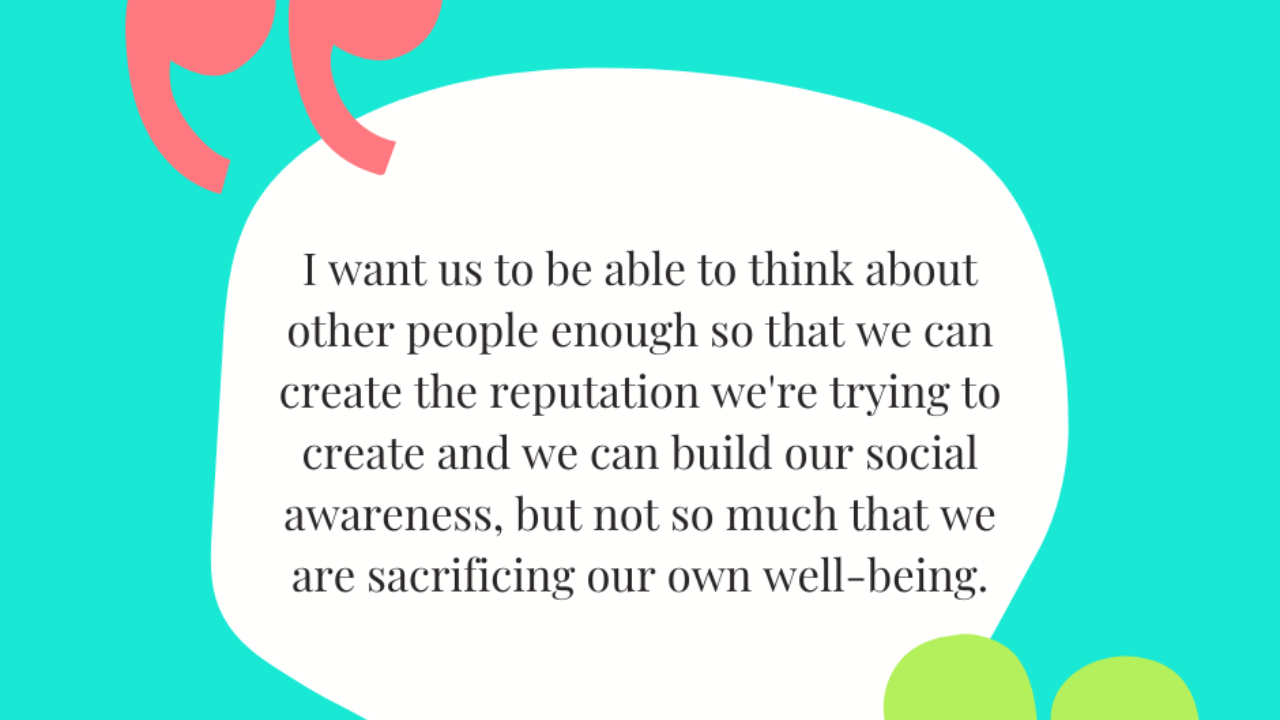
This blog post is a transcript of Episode 100 of my podcast/YouTube series. Because of that, it is not written to be grammatically/syntactically correct.
You can listen here and watch here.
Once upon a time, there were students who struggled to create a reputation for being friendly.
Some students didn't notice when other people wanted or needed something, while other students always offered their help, even when it wasn't wanted or needed.
Sometimes students didn't ever talk about their thoughts or opinions, while sometimes they only talked about their thoughts or opinions.
And some students didn't ever say friendly things to others, while other students said friendly things so often that they came across as fake.
I created the lesson we're talking about on this episode for all of these students.
In this lesson, students learn about the just right zone, which is actually quite large, and how they can increase their self-awareness to create a reputation for being friendly.
A side note for the concept of being friendly: There is a difference between being friendly and being nice. This has actually come up in some of my groups before. I focus on a reputation for being friendly, which basically means we can get along with other people, we can be considerate toward other people, we can be friendly. Nice has a connotation of someone who can be a pushover, someone who can be a doormat. We don't always have to be nice. And in reality, there are sometimes where we probably shouldn't be nice.
So I do want to make that distinction. I don't want my students to always be nice. There are sometimes I don't want them to be nice in certain situations, but I think everybody can be friendly almost all the time. We can be friendly toward people we don't really get along with. We can be friendly toward people we don't know. We don't have to be nice to people who aren't being kind to us, but we can be friendly, because they're not the same thing. So I do want to add that disclaimer before we jump in here.
Looking at our checklist, which is available on the website, this lesson covers a couple different things. One is that the student has a reputation for being a teacher's pet, and another one is the student always wants to help, even if it isn't wanted or needed.
This lesson is a bit tricky because most people don't think about the fact that you can overdo your attempts at being friendly. It's pretty common knowledge, pretty well known, that you can 'underdo' your attempts at being friendly to where people don't think you're a friendly person at all, but it's not always thought about that you can overdo your attempts at being friendly.
Every time I teach this lesson, students are surprised. There are things that we talk about that they had never even thought about or considered, and that's why we're here. That's why we're here to talk about all these things that our students just don't always know or understand. That's exactly the point of all of the things that I teach is they're not the obvious things that most other programs and curriculums and classes teach. They're the much more subtle, nuanced things, which is why I say I don't like saying I teach social skills, because I don't think these are social skills. I think these are much more nuanced parts of the social world.
Prior to this lesson, we have lessons on a reputation for being smart and a reputation for being funny. This is all in the first module of the program. This lesson that I'm talking about right now is lesson six. Lessons three and four were about a reputation for being smart. Lesson five was about a reputation for being funny. This one, lesson six, is a reputation for being friendly.
I do share in the lesson, just like how I gave the disclaimer, the difference between friendly and nice. The students can use whatever word they want to. I don't tell anybody what vocabulary they can and can't use. I do point out the difference, because I think it's important. And as I mentioned, I've had students bring it up in the lesson as well, because I have had a couple students who don't want a reputation for being nice. They think that appeals more to people who are a pushover or a doormat. That's why I always use the word friendly.
I shared in a previous episode, when we talked about a reputation for being smart, that I created a scale that I call the Reputation in Moderation scale. We use that scale again in this lesson. As a reminder, if you missed that episode or it's been a few episodes ago at this point, the scale goes from zero to 10 and it looks like a bell curve. Around the three and the seven are what I call the invisible lines. In order for us to have the reputation that we're trying to create, whatever it may be, we want to try to be between a three and a seven. Between three and seven is a pretty wide range. It gives us all some room for individuality.
We use that scale again for this lesson. We talk about how if we are doing things less than a three, it's hard to create the reputation that we want, because we're not doing those things often enough, the things we say or the things that we do. If we're doing them more than a seven, usually that means we've crossed the invisible line into having a reputation for being annoying. No matter what kind of reputation we're trying to create, if we're doing certain things too much, we fall off that bell curve into having a reputation for being annoying. So we review that scale again before we start this lesson.
I give an example in this lesson about going to lunch with a friend. Our students are all ages, but we can pretend we're in the school cafeteria, we can pretend we're hanging out somewhere with a friend on the weekend, we can pretend that we're adults and we're going out on a date or just hanging out with friends somewhere. It's applicable no matter how old we are. I say, "I want you to imagine that you go to get some burgers or some pizza, and your friend realizes they don't have any money. You have $20 and so they ask you if they can borrow $20 to get something to eat, and that's all you have." So I ask the students, "Would it be friendly for us to give this person our $20?" As I've said before, because this is a question I'm asking in the context of the lesson, the students realize there must be a catch to it. Otherwise, I wouldn't be asking it!
Circle students typically have a reputation for being friendly. Circle students are the students that people, like people, get along with. They would give somebody their $20. Triangle students would not typically give somebody their $20. The point is, I want them to think about the consequences for everybody in this scenario. Obviously, it would be considered friendly to give another person money when they don't have money. But what does that mean for us? I really want my students to see the other side of that. What does that mean for us? We start this lesson by having a conversation about this.
What does it look like if you say no? If your friend asks for $20 and you say no? We all agree that you would end up pretty low on the scale. Okay. What does it look like if you gave them $20? We all agree that they would think we were really friendly, but now we cannot eat lunch. And so I ask, "What would it look like to be somewhere in the middle?" And the students realize that you could share the money. Or you could buy something since you have money, and share your food with them. There are different ways that both of you can eat with the money that only one of you has.
That's really what I want students to think about. I want us to be able to think about other people enough so that we can create the reputation we're trying to create and we can build our social awareness, but not so much that we are sacrificing our own well-being. I do not want my students to think about other people so much that it gets in the way of their own well-being and happiness, which is often what happens to square students. Because of their social anxiety, they often will sacrifice their own wants, their own needs, their own well-being, to try to make sure they're making decisions that make everybody else content or happy or satisfied. That's not what I want for my students. I want us to be somewhere in the middle where we can make choices that are friendly, but not sacrifice our own sanity at the same time. We talk about the concept of balance. That's what this whole Reputation and Moderation scale is all about. That's what life is all about, right? Moderation and balance.
The first poll for this lesson is: Do you talk about things that other students in the group are talking about? In the in-person lessons, I have certain parts of the room that students go to depending on their answer. In Zoom I can make polls. Do you talk about things that other students in the group are talking about?
My shining example of this is: Many years ago in a group (his was middle school students), I can't remember what the topic was, but I knew that what they were talking about, a student who was listening also had as a hobby. I think it was playing Dungeons and Dragons. A couple students were talking about it and he was listening, but he wasn't participating or engaging. He was new to my program and that's what I noticed about him. He was always listening to other people and he had a really good social memory, but he did not ever engage in conversations. I just happened to know that he also played Dungeons and Dragons, and so I facilitated him joining that conversation. I think it just had never occurred to him that he could join and participate in the conversation. I think a group conversation was a little bit overwhelming for him, and that just wasn't a thought that he had that he could join and participate. And so that's our poll question: Do you talk about things that other students in the group are talking about?
There's a huge difference between listening and engaging and participating. They're very different when it comes to our social skills, when it comes to our reputation, when it comes to the outcome that we're going to get from that situation. All the students place themselves on the scale. Where do you think you are when people in the group are talking about something? We use Starfish Social Club as an example, obviously, because that's where we all are. But there are so many discussions and conversations that we have, both in our lesson time and in game time. there are so many discussions that are going on that students are always in a position to contribute to a discussion or a conversation. What I want them to think about is whether they do or not. So that's our first poll: Do you participate in group conversations that are happening? Do you contribute to the conversation, do you share your thoughts, do you share your opinion, or do you just listen? Or not even listen, do you withdraw and isolate?
There's no right or wrong answer. There's no right or wrong answer to anything. It's just a way for students to build some self-awareness. And if students realize they don't engage and participate, this is a great opportunity for them to decide if they would like to do that more. And I have seen just this one question in this one lesson make a big difference for students when they realize, 'Oh, I'm not engaging and participating. I'm not saying something.' Even though they're listening, and they can tell you everything everybody else said. Everything I talk about is just little things that can make such a big difference. This is a great example.
And then there are students who might realize that they're always in the middle of every conversation and discussion, even if it might be something that doesn't necessarily apply to them. That's where the moderation comes in. How can we find ourselves somewhere in the middle? You might be a three, you might be a seven. There is no right or wrong. We just want to find ourselves somewhere in the middle.
We talk about the balance of: If you're not ever joining conversations and participating and engaging, it's hard for other students to notice you socially. We typically pay attention to the people we're talking to. So if you're not joining that conversation, you typically just fall out of other people's brains. It's not intentional, it's not malicious, it's just what happens when we're not participating. But if you're always in the middle of every conversation, that's where we can cross the invisible line into having a reputation for being annoying.
The next one is such an interesting conversation to have with students. It's another poll, so I'll ask the students, "Is there such a thing as complimenting someone too much?" And again, because I asked this, obviously there's more to it than just what you would immediately think. Is there such a thing as complimenting someone too much?
Spoiler alert, the answer is yes. We have a really in-depth conversation about this, which I'm going to say it's going to be specifically for the students who are in my groups. But obviously we all know that there are people in the world who don't ever compliment anybody. It's hard to have a reputation for being friendly if you're not saying polite, friendly things to people. But it's very real that people can go on the other side and do this too much. Also, it's very real that people can do this in a fake, inauthentic way, just to try to get friends or get something, whatever it is that they might want. We have an adult term for that. Two words, first word is 'kiss'. We have an adult term for people who go to the other side of giving people compliments and saying kind things and polite things. The kids version, sometimes they call it a teacher's pet. Someone who's like a suck up, someone who's always trying to be kind and polite to the adults. So I'll save that juicy part of that conversation for the students that are in the group.
I also add to this that this is a similar discussion to telling our family members that you love them. We have a conversation about that, that for some of us, it's just not in our habit or routine to tell people that we love them, and some of us do it to try to, I don't know, get out of trouble! So we talk about this as well, how it makes people that we love feel really good when we tell them that we love them, but it makes people feel manipulated when we do it all the time, or when we do it because we're in trouble. Just bringing some awareness to being able to tell people that you love them. It would be awesome if we could all be somewhere in the middle on that.
We also talk about how to give people compliments that are authentic and that don't come across as creepy, because that can be a hard line. Even I had that happen to me a couple of weeks ago. I was walking in the park and a guy came up to me and was trying to compliment me, but it was awkward and uncomfortable and creepy. So we talk about that in this lesson: If you're going to give people compliments, let's talk about how to do it and not be awkward and creepy, because that's absolutely not what we want.
We definitely don't want our kiddos trying to be friendly and instead being weird and creepy. All the students get to decide where they feel like they are on the scale. When it comes to giving people compliments, when it comes to saying I love you, where do you think you are on the scale? And if you are outside of three or seven, is that something that you would like to work on?
The next poll question: Is it possible for someone to be too helpful? Again, this must be a trick question because Steph is asking it in the group. Is it possible for someone to be too helpful?
I share a couple of real stories. I love sharing stories about actual Starfish students. They are always stories from the past because I don't want to call anybody out, but I love sharing stories about actual Starfish students, because sharing a story takes it away from being personal. I'm not talking about you, I'm talking about other students. But stories also help us connect and relate to people, so sharing stories about other Starfish students helps the students I'm talking to build a connection and a sense of relatability.
I share a couple stories about real things that have happened at Starfish, where students have done things that they thought would be helpful to me specifically, and ended up being quite unhelpful. The point of the story is to show that, I say 'helping isn't always helping'. Just because you think you're helping somebody, if they did not ask you to do the thing that you're doing, or if there isn't anything that made you think that they would want you to do that thing, it may actually be the opposite of helpful. In both of these stories, they were students who were just trying to be helpful and friendly toward me, but did things that ended up being very unhelpful.
It's important for students to see actual examples of that, because otherwise it's hard for them to understand and relate to that concept. Especially the circle students, it's hard for them to recognize that there's such a thing as being too helpful to the point that it's annoying. It's hard to recognize that.
Probably about a month ago, I was walking in the building at the same time as him and I was carrying the bin with the games, and he asked, "Can I help you with that?" And I just thought, that's such the perfect balance, because it gives me the option to say yes or no. He didn't come up and, "Oh, let me take that for you!" Because maybe I didn't want him to. But he asked, "Can I help you with that?" It's a perfect way to give somebody the option to say yes or no. But it also showed how much social awareness he has that he saw me and recognized I might need help. Some of our students don't have that level of social awareness yet to see another person and recognize they might not be able to open the door. Or that thing they're carrying might be really heavy. Or they look really tired, I wonder if they might like help with that? All kinds of things out in the world that we could help somebody else out with, but it's a really helpful strategy to ask first, because they might really appreciate our help and they might not. They might not want our help.
Students get to put themselves on the scale for that one. We talk about things like: What do you do at home that's helpful? I have to say, I'm surprised how many of my students don't have chores or things like that, responsibilities at home. It's kind of surprising to me. In my upbringing, we went the other way. My brother and I were responsible for everything. I think it was a little much for children. But again, the happy medium, the Goldilocks zone, the three to seven.
So what do you do at home that's helpful? What chores do you do? What responsibilities do you have? Do you notice if your parent is coming home from the grocery store, do you help them put things away? If your family is done eating dinner, do you help clean up afterward? Do you help if your pet needs to be fed? Do you pick up your clothes off the floor and put them in the hamper? What are the things that you notice that might be helpful to the people that you live with? Just working on our ability to notice.
I think a lot of our students, I would say this is especially true for circle students, but even triangle students and square students, they haven't developed the ability to notice what other people might want or need. It's a higher-level social ability, and not all of our students have developed that ability. Not all adults have developed that ability to notice what other people might want or need. But in order to have a reputation for being friendly, it's something that we really need to work on. Being friendly means being around other people in a way that makes them feel safe, makes them feel comfortable, makes them feel like they want to be around you again. A big part of that is paying attention to what other people might want or need.
We also talk about noticing when other people might be upset or having a hard time. One of the things that really stands out at Starfish, if somebody's having a hard time, is the way other students talk to them or about them. Kids learn what they are exposed to. We as human beings do not have the ability to learn things that we're not exposed to. So kids will only say what they've heard other people say. It could be what they've heard people say to them when they're having a hard time. It could be what they've heard their teacher say to the kid in the class that has a hard time, what they've heard their parents say to their sibling who has a hard time, but it always comes from something they've heard someone else say. It's usually an adult, just because kids typically learn by mimicking adults, but it could be other kids.
When I was working in the school system as a behavior specialist, part of my job was going into classrooms and observing specific students. So they would say this is the kiddo, this is the class he's in, this this is what we're struggling with. I would go in and I would identify who the kiddo was, and I was really good at not giving any specific attention to that student. I didn't ever want it to be obvious to anybody else, so I would find a random place in the room where I could sit, where I could see the whole class, because I didn't ever want to give specific attention to that student. I didn't want them to know that I was there to observe them.
But it was interesting how often, especially at the elementary level, kids would come up and say, "Are you here for so and so?" And they were usually right. I remember one time they were getting ready to leave the classroom, and the kiddo kept turning a light off and on. One of the other students looked at me and said, "This is when you're supposed to call the principal." It's just interesting to notice things that kids say when somebody's having a hard time.
I take my role as a role model very, very seriously. I try to be incredibly aware of what I say and how I say it any time somebody's having a hard time, because I want the students to copy me. I want them to say what I'm saying, and so I need to make sure that I am always being patient and supportive any time somebody's having a hard time. So we talk about that in this lesson. If you notice that somebody's having a hard time, what is something that you could say that could be friendly?
Again, not nice. This person may be cursing, they may be throwing things. We don't have to be nice, but how can we be friendly? Once I phrase it that way, they will usually very quickly come up with... Somebody will always say, "We can ask if they want a hug." Somebody will always say that, which I think is so beautiful. We can ask if they want to hug. We can ask if they want to take a break. We can ask if there's somebody they want to talk to. We can ask 'How can I help?' That's a big thing I try to say, "How can I help?"
At Starfish it doesn't happen that often, I think just because our environment is very different, there are no requirements, there's no academics, there's nothing anybody has to do, so the environment is definitely different, but there are times... Social is hard. It is hard to work on social skills when it's something that you have a hard time with. So there definitely are times that kids cry or get upset or yell or throw the game up in the air. And so I really love the times that students see that, and they either are able to move on and let that student have their space, or they make an effort to try to be friendly toward that student. That was a side note, but I think a really important side note. As an adult, please just be really mindful of how you respond when people around you, especially the little ones around you, are having a hard time, because they learn from us.
Every once in a while, I'll have a kid refer to someone as 'they're being bad today'. That one breaks my heart. And so anytime I have somebody say that, I've even had kids say it about themselves, anytime I have somebody say that, I will stop everything, and we will have a really heartfelt discussion about how there's no such thing as a bad kid. And I'll say it over and over, and then I'll be silly about it, and I'll turn it into a poll. I'll say, "Okay, everybody, we're going to do a poll. Is there such a thing as a bad kid? Your choices are NO, NO and NO1" They think it's really funny, but it's my way of very adamantly making the point that there is no such thing as a bad kid. We all, all of us, make choices sometimes that aren't the best choices. We all make choices that have some pretty difficult consequences sometimes, but there's no such thing as a bad kid. So I don't want kids to say that about each other, and I do not want them to say that about themselves.
Another thing we talk about in this lesson is a concept called a social wondering question. This concept is woven throughout everything at Starfish because it is the difference between an informational conversation and a social conversation. An informational conversation is where we're just exchanging information. We might be asking someone a question, somebody might be asking us a question, we're just exchanging information. A social conversation is where we're actually trying to engage with another person with the ideal outcome being that we learn more about each other.
A social wondering question is a question designed to help you learn more about somebody. I'm going to save this one for the kids in the group as well, but this is something that we do all year round, all the time, is we work on social wandering questions. And we work on how to switch an informational question into a social question, because a lot of our students are good at informational questions. How can we switch that same track that you're on, that same thing that you're thinking, how can we turn it from an informational question into a social question? It's super easy to do once kids know how to do it. So that's our last topic for this lesson is social wondering questions. How often are you asking other people social wondering questions?
If you're below a three, it's hard to have reputation for being friendly if you're not asking other people questions and engaging in conversations with a goal of learning more about them. It's hard to have a reputation for being friendly if we're not putting an effort into learning more about somebody. If we're always asking people social wondering questions, we sound like we are an interviewer. We sound like we're standing in front of them with a microphone. And it actually gets kind of weird. It gets a little bit creepy.
I will say, from my experience dating, this is something that comes up on both sides of this scale. Sometimes it comes up especially when people are nervous, that we default to talking about what we know, which is us. Ourselves. And so sometimes when people are really nervous, they just talk about themselves. I remember I went on one date a few years ago and every time he would ask me a question, I would answer it, and he would take my answer and turn it into something about him. After the third time he did that, I just kind of quit talking, and I was just waiting until it was an appropriate time to end the date because he was asking me questions, but he never expanded upon my answers in order to talk more about me. He would ask me the question and I would answer, and then he would turn it into something about himself, and go on for minutes just talking about himself, and then ask me another question and do the same thing.
On the other side, you can have people, again sometimes it's due to nerves and anxiety, who are trying to put their best foot forward, and so they're only asking the other person questions, and it just feels like an interview. It feels almost insincere.
When we talk about students improving their self- and their social awareness, every time they improve on something, it creates a new a new challenge. One of the things that I see is, once students graduate from not ever asking other people questions to learning how to ask other people questions about themselves, this is typically where they land next. They land at the interview stage. Which is much preferable to me from them not ever asking other people questions. It just means we've still got to keep going, because the interview stage should not be our final stage. But this is a step above not ever asking other people questions, because now you show that you... Asking questions is hard. You have to generate questions to ask people. It's actually really difficult. So this is a step up for students who don't know how to ask other people questions. But then once we get to the interview stage, we've gotta keep moving up. There's always another level. That's why kids can be in my program for as long as they want to, because there's always another level. No matter what we're learning, what we're doing, there's somewhere new to go.
Alright, let's see what we're talking about next time. Let me find my magic number generator. It has us at 13. Thirteen would be module two, which is our noticing awareness module, and it would be lesson five. I mirror these around the school year here in the US, so module two is the one that we do from October to December. The last part of module two, the last four lessons lead up to the holidays. I don't talk about specific holidays because not everybody observes the same holidays, or even any holiday, but these last four weeks of module two lead up to something really cool that we do our last week of module two. So lesson five is Show and Tell week, but it has very specific objectives to it. There's a lot of things that we are practicing and learning during Show and Tell week, but it is legitimate Show and Tell week. It's probably everybody's favorite week of the year, because it's legitimately Show and Tell week. So that's what we'll talk about next time is how I use Show and Tell week, all the things that I incorporate into it, and where we go from there, because there's three lessons after that that incorporate what happened during Show and Tell week. Thank you for being here, and I'll see you again next time.
Author

